Showing posts with label wildlife. Show all posts

Wednesday, June 8, 2022

Decline in Hunters Affects USA Deer Management

white-tailed deer
white-tailed deer | credit: USFWS
Each year, American deer hunters are aging out of the sport. Meanwhile new hunters are not being recruited to replace them. 

Due to the decline in hunters, deer management strategies will need to change to manage populations of whitetails in many states.

That is the conclusion of Penn State’s Duane Diefenbach, one of the leading white-tailed deer researchers in the USA. He suggests that demographic trends of big-game hunters will dictate that wildlife agencies consider modified, or completely new, regulations to manage white-tailed deer populations.

“Recreational deer hunting is the primary tool that’s available to state wildlife agencies to manage the resource, but in the next 10 years we’re going to see a steep decline in the number of hunters,” said the adjunct professor of wildlife ecology in the College of Agricultural Sciences. “A few states still have large numbers of hunters, but this is coming at all the state agencies very quickly. In the next 10 to 15 years, there’s going to have to be changes. The question is, what alternative tools are available to meet this deer-management challenge?”

The North American Model for Wildlife Conservation, which treats wildlife as a public resource not owned by individual landowners, has relied on revenues from the sales of hunting licenses largely to pay for wildlife conservation for more than a century. With fewer hunters, the challenge will be to find new tools to achieve management goals, according to Diefenbach.

Diefenbach outlined concerns about the effects of hunter demographic trends in a chapter of the recently published book, “Harvest of Fish and Wildlife: New Paradigms for Sustainable Management.” 

Diefenbach co-wrote the chapter, “The Future of Managing Ungulate Species: White-tailed Deer as a Case Study,” with Matthew Knox and Christopher Rosenberry, deer biologists with the Virginia Department of Wildlife Resources and the Pennsylvania Game Commission, respectively.

Research by the trio suggests that the coming decline in hunters will have major impacts on deer populations. Part of the decline is associated with changes in demographics.

“Compared to the general population, demographics and residency of big game hunters have changed little over the past 30 years,” he writes, adding that National Hunting, Fishing, and Wildlife-Associated Recreation surveys of 1991 and 2016 show big game hunters have remained more than 90% male and 97% white; whereas the U.S. population is 48% male and non-whites have increased from 15% to 22% of the population.

In the general U.S. population, there has been an increasingly older age structure, Diefenbach noted. In 1991, 41% of the U.S. population was more 45 years old, which had increased to 52% by 2016. However, hunters more than 45 years old increased from 28% to 60% during the same time period.

In some states, wildlife managers are applying new strategies to control deer populations. Allowing hunters to take multiple deer is one. In Virginia, managers there have been effective at increasing the harvest of antlerless deer by implementing a unique “earn a buck” program.

To participate in the program, once a hunter in Virginia harvests an antlered buck, he or she must then harvest at least one antlerless deer before they can harvest a second antlered buck.

Diefenbach has conducted more than a dozen peer-reviewed studies over the last 20-plus years, carefully monitoring hundreds of deer that were captured and fitted with radio or GPS collars.

Leader of Penn State’s Pennsylvania Cooperative Fish and Wildlife Research Unit, Diefenbach has overseen two fawn mortality studies (the latter with a predator-identification component), a fawn stress study, studies on bucks that looked at the effects of antler-point restrictions and dispersal, research on female deer harvest rates and survival, and female deer dispersal.

Diefenbach worked for the Pennsylvania Game Commission for seven years before arriving at Penn State. He also has done projects that looked at developing population estimators to assess deer abundance, estimating hunter-harvest rates and assessing the impacts of selective browsing on forests.


Sunday, November 17, 2019

Wetland, Woodland, Wildland Guide to Natural Communities of Vermont

A completely updated second edition of Wetland, Woodland, Wildland: A guide to the natural communities of Vermont will be available in late 2019. 

The land guide is well-known to anyone curious about Vermont’s forests, wetlands, mountaintops, and shores.

Co-authored by Elizabeth Thompson of the Vermont Land Trust, and Eric Sorenson and Robert Zaino of the Vermont Fish and Wildlife Department, the new second edition incorporates recent scientific research about the state’s natural communities and includes descriptions of seventeen newly recognized natural community types.

The new guide includes photographs, line drawings, and user-friendly writing, related to natural habitats of Vermont. The updates will be useful to amateur naturalists and professional scientists.

“Natural communities help us understand nature. When people can see patterns across the landscape, they have a better appreciation of nature and a heightened sense of responsibility to protect it,” says co-author Elizabeth Thompson.

Natural communities are also important for the conservation of plants, animals, and habitats in Vermont.

The book is published by the Vermont Fish and Wildlife Department, The Nature Conservancy, and the Vermont Land Trust, and it is distributed by Chelsea Green Publishing.

It is currently available for pre-order online (https://vtfishandwildlife.com/wetland-woodland-wildland) and is expected to be for sale in local bookstores by November 15.

source: Vermont Fish and Wildlife Department

Sunday, August 11, 2019

White Tailed Deer Apparel, Accessories, Gifts

White tailed deer apparel, drinkware, stickers, note cards, and other accessories are always popular as gifts for wildlife enthusiasts, deer hunters, and outdoor explorers. This article showcases a few white tailed deer theme items. This post contains paid links.


This all over print shirt features a winter scene with a large white tailed buck.

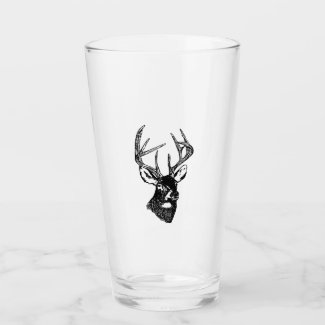
Designed for sportsmen and wildlife enthusiasts, this collectible glass is decorated with a "big buck" white tailed deer icon.


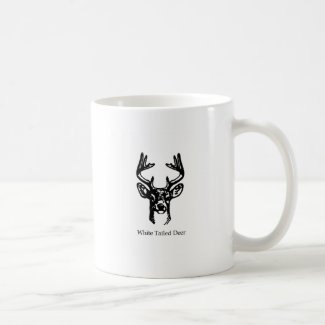
This coffee - hot drink mug features an 8 point buck white tailed deer illustration.


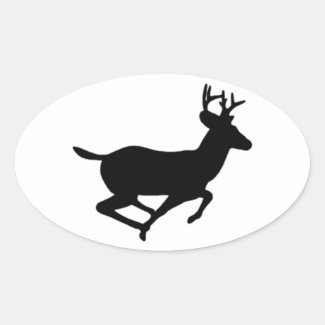
Featuring a running deer icon, this Euro style oval sticker could be displayed on deer hunter's trucks, SUVs, four wheelers, or other machinery.


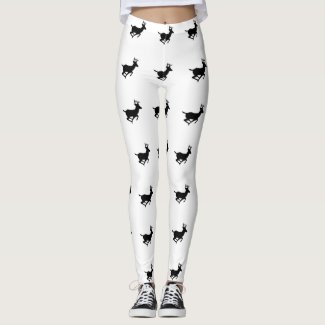
These white tailed deer - outdoors theme leggings are decorated with a running deer pattern.


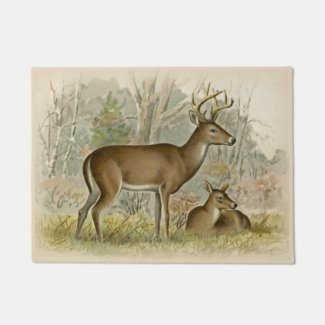
This doormat features a vintage style white tailed deer illustration.


This mask is decorated with a mule deer buck and doe scene


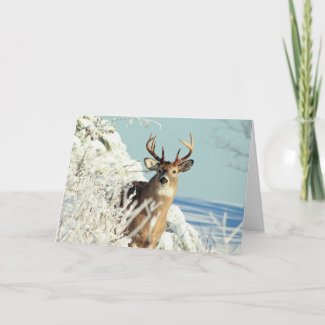
This note card is designed to accompany deer-related gifts.


Featuring a pattern of white tailed deer buck icons, this wrapping paper is for hunters or other outdoor lovers.

The full line of white tailed deer collectibles can be found at North America online store.


Sunday, October 18, 2015

Wildlife Themed Gift Ideas

Featured in this post are a variety of wildlife and nature themed products which are suitable as holiday gifts.

Calendars are popular for winter holiday gifts:


This collection of calendars includes gift ideas for birdwatchers, beach combers, shell collectors, and other nature enthusiasts

A popular accessory is wildlife themed wrapping paper:


Wildlife and nature themed wrapping paper in this collection are suitable for Christmas, birthdays, and other occasions. Designs feature birds, fish, mammals, floral patterns, foliage, and others.

Wildlife and nature theme doormats are another possibility:


A doormat can be a practical gift while also serving as an accent or decor piece. Nature doormats depict beautiful landscapes, native plants, floral prints, tree bark, animals, birds, fish, and others.

Related Posts

Red Fox Art
Nature Pattern Leggings

Friday, February 14, 2014

Best Areas to View Snow Geese in New Jersey

Snow Geese
Snow Geese

The following is a summary of the best areas in New Jersey to view snow geese:

Northern Jersey

In Northern Jersey, snow geese often winter at Merrill Creek Reservoir. These flocks typically exceed 15,000 birds in January and can build to over 75,000 birds in late winter. Merrill Creek Reservoir flocks may cover a wide area during daily feeding forays. Feeding snow geese are usually found from Belvidere to Washington to Clinton to Flemington.

Central New Jersey

Snow goose flocks typically total 5-10 thousand birds in central New Jersey. Flocks in this region are seen feeding in fields in an area from Cranbury to Roosevelt to Wrightstown to Burlington.

Delaware Bay

Delaware Bay tidal marshes and nearby inland farm fields attract the highest numbers of snow geese in New Jersey. During the Mid-Winter Waterfowl Survey in early January, researchers may estimate 100,000 light geese in these areas.

Delaware Bay flocks feed, roost and loaf in the tidal marshes yet often make inland field feeding flights primarily into Salem and Cumberland Counties. At times, flocks range as far inland as Mullica Hill, Turnersville and Franklinville.

Southern New Jersey
Snow geese can be found in and around Forsythe National Wildlife Refuge in Oceanville. Mid-Winter Waterfowl Survey counts from early January are typically about 5,000 birds in this region.

source: NJDEP Division of Fish and Wildlife

Wednesday, February 5, 2014

Connecticut Urban Waterfowl

Researchers found high numbers of mallards and other puddle ducks in urban sanctuaries during Connecticut’s annual Midwinter Waterfowl Survey. The presence of wild waterfowl in urban areas is often associated with supplemental feeding activities, according to the Connecticut Department of Energy and Environmental Protection (DEEP).

“The Department discourages citizens from feeding waterfowl for a number of reasons, including increased risk of disease transmission, potential for poor nutrition, and a clouding of the real issue facing waterfowl and wildlife in general in Connecticut – loss of suitable habitat,” said Rick Jacobson, Director for the DEEP Wildlife Division.

DEEP conducted the annual Midwinter Waterfowl Survey on January 8 and 9, 2014. The survey is conducted throughout the Atlantic Flyway, and is used as an index of long-term wintering waterfowl trends.

The Connecticut survey is conducted from a helicopter and a census is obtained from the coast, the three major river systems, and selected inland lakes and reservoirs.

A brochure entitled, “Do Not Feed Waterfowl” outlines potential hazards of feeding waterfowl. The document is available on the DEEP website at: http://www.ct.gov/deep/lib/deep/wildlife/pdf_files/game/NoFeedWF.pdf.

source: Connecticut Department of Energy and Environmental Protection