Friday, December 27, 2024

Chico CA Snow Goose Festival

Snow Geese
Snow Geese

The Chico Snow Goose Festival celebrates the annual winter waterfowl migration in California's North Sacramento Valley.

Millions of geese, ducks, swans and other birds visit the Sacramento Valley from as far away as the Arctic regions of Alaska, Canada, and Siberia, making the valley the most important wintering area along the great Pacific Flyway.

Geese, swans, ducks, and sandhill cranes have been spending their winters in the Sacramento Valley for thousands of years.

Waterfowl and shorebirds migrate south on all the U.S. flyways, but on other routes cold weather keeps them on the move. In the Sacramento Valley, mild winters allow the birds to stay in one area, creating a viewing opportunity nowhere else available.

The Festival features dozens of field trips and workshops that range out into six counties. The field trips spread out into the rice fields, wildlife refuges, and river walks where mild winter weather, abundant food and lots of water draw the avian arrivals.

Local wildlife naturalists lrad field trips to educate participants about waterfowl and other migratory birds. In rice fields and on refuges, birding experts describe how to pick out a swan from a goose from a duck. Other field trip leaders will focus on sand hill cranes and their dancing behavior.

Some trips are scheduled around fly-offs when thousands of snow geese take off as they move to a new feeding. Observers are likely to find ducks and geese as trip leaders have scouted out the best viewing sites.

The Festival also celebrates plant and animal life in the North Sacramento Valley. There are programs on wildlife and habitats in addition to rice fields and refuges.

Some field trips explore habitats including vernal pools, grasslands, nature preserves and even hiking in scenic Sutter Buttes.

Festival workshops explore nature photography, beginning birding, birds of your backyard, watchable wildlife, wood ducks, decoy duck carving, and other wildlife-related activities. Also featured are wildlife art exhibits and nature displays.


A Friends of Sacramento National Wildlife Refuge webcam provides views of a seasonal wetlands pond with migrating waterfowl and raptors. 

For more information, or visit the Snow Goose Festival website at www.snowgoosefestival.org.

Sunday, May 26, 2024

Gear and Equipment to Carry for Wildlife Watching

birdwatching - osprey in tree
The right gear and equipment can greatly enhance the experience of wildlife watching.

In many cases, binoculars are essential, allowing for a closer look at animals in their natural habitat without causing disturbance.

A camera may also be useful for capturing the beauty of wildlife; even a simple point-and-shoot can suffice for beginners.

Field guides, whether in book form or as a mobile app, are invaluable for identifying and learning about different species.

For those planning to spend extended periods outdoors, appropriate clothing is crucial. Layering is key, with a base layer that manages moisture, an insulating layer to retain warmth, and a protective outer layer to shield against the elements.

Comfortable, waterproof footwear is also important, as conditions can vary from wet marshlands to dry, rocky paths.

A hat and sunglasses will provide protection from the sun, while gloves and a warm hat are necessary for colder climates.

A backpack is usually useful for carrying supplies, which should include water, snacks, a first-aid kit, and other gear.

For the tech-savvy, a smartphone loaded with relevant apps can serve as a multifunctional tool, offering access to field guides, GPS mapping, and the ability to record sightings.

Others may choose low tech gear such as a traditional compass, paper map, and notepad with pencil.

In addition to equipment, patience and respect for wildlife and habitats is important. A useful rule of thumb is to observe without impacting the natural behavior of wildlife.

With the right preparation and gear, wildlife watching can be a rewarding and educational experience, offering a unique glimpse into the lives of wild animals and the ecosystems they inhabit.

Related Information

Songbird Photography Tips

Wednesday, June 8, 2022

Decline in Hunters Affects USA Deer Management

white-tailed deer
white-tailed deer | credit: USFWS
Each year, American deer hunters are aging out of the sport. Meanwhile new hunters are not being recruited to replace them. 

Due to the decline in hunters, deer management strategies will need to change to manage populations of whitetails in many states.

That is the conclusion of Penn State’s Duane Diefenbach, one of the leading white-tailed deer researchers in the USA. He suggests that demographic trends of big-game hunters will dictate that wildlife agencies consider modified, or completely new, regulations to manage white-tailed deer populations.

“Recreational deer hunting is the primary tool that’s available to state wildlife agencies to manage the resource, but in the next 10 years we’re going to see a steep decline in the number of hunters,” said the adjunct professor of wildlife ecology in the College of Agricultural Sciences. “A few states still have large numbers of hunters, but this is coming at all the state agencies very quickly. In the next 10 to 15 years, there’s going to have to be changes. The question is, what alternative tools are available to meet this deer-management challenge?”

The North American Model for Wildlife Conservation, which treats wildlife as a public resource not owned by individual landowners, has relied on revenues from the sales of hunting licenses largely to pay for wildlife conservation for more than a century. With fewer hunters, the challenge will be to find new tools to achieve management goals, according to Diefenbach.

Diefenbach outlined concerns about the effects of hunter demographic trends in a chapter of the recently published book, “Harvest of Fish and Wildlife: New Paradigms for Sustainable Management.” 

Diefenbach co-wrote the chapter, “The Future of Managing Ungulate Species: White-tailed Deer as a Case Study,” with Matthew Knox and Christopher Rosenberry, deer biologists with the Virginia Department of Wildlife Resources and the Pennsylvania Game Commission, respectively.

Research by the trio suggests that the coming decline in hunters will have major impacts on deer populations. Part of the decline is associated with changes in demographics.

“Compared to the general population, demographics and residency of big game hunters have changed little over the past 30 years,” he writes, adding that National Hunting, Fishing, and Wildlife-Associated Recreation surveys of 1991 and 2016 show big game hunters have remained more than 90% male and 97% white; whereas the U.S. population is 48% male and non-whites have increased from 15% to 22% of the population.

In the general U.S. population, there has been an increasingly older age structure, Diefenbach noted. In 1991, 41% of the U.S. population was more 45 years old, which had increased to 52% by 2016. However, hunters more than 45 years old increased from 28% to 60% during the same time period.

In some states, wildlife managers are applying new strategies to control deer populations. Allowing hunters to take multiple deer is one. In Virginia, managers there have been effective at increasing the harvest of antlerless deer by implementing a unique “earn a buck” program.

To participate in the program, once a hunter in Virginia harvests an antlered buck, he or she must then harvest at least one antlerless deer before they can harvest a second antlered buck.

Diefenbach has conducted more than a dozen peer-reviewed studies over the last 20-plus years, carefully monitoring hundreds of deer that were captured and fitted with radio or GPS collars.

Leader of Penn State’s Pennsylvania Cooperative Fish and Wildlife Research Unit, Diefenbach has overseen two fawn mortality studies (the latter with a predator-identification component), a fawn stress study, studies on bucks that looked at the effects of antler-point restrictions and dispersal, research on female deer harvest rates and survival, and female deer dispersal.

Diefenbach worked for the Pennsylvania Game Commission for seven years before arriving at Penn State. He also has done projects that looked at developing population estimators to assess deer abundance, estimating hunter-harvest rates and assessing the impacts of selective browsing on forests.


Thursday, November 21, 2019

Wyoming Mule Deer Initiative Projects

Mule Deer
In November, the Wyoming Game and Fish Commission (WGFC) voted to approve $560,000 for ten projects to support mule deer populations across Wyoming.

Developed through the Statewide Mule Deer Initiative (MDI), the new projects will focus on improving to mule deer habitat and migration paths.

The projects will build upon MDI efforts that have been ongoing for over a decade.

The projects slated for the coming year are expected to benefit nine herds of mule deer and improve 1.2 million acres of habitat.

In Wyoming, Mule deer are an iconic species. They are found in the high plains, great basin desert, the alpine mountains, and everywhere in between.

A statewide Mule Deer Initiative written by the Wyoming Game and Fish Department was adopted by the Wyoming Game and Fish Commission in July 2007 and updated in July 2015.

The Mule Deer Initiative outlines factors contributing to declining mule deer populations and identifies strategies to, at minimum, sustain current deer numbers.

source: Wyoming Game and Fish Commission

Sunday, November 17, 2019

Wetland, Woodland, Wildland Guide to Natural Communities of Vermont

A completely updated second edition of Wetland, Woodland, Wildland: A guide to the natural communities of Vermont will be available in late 2019. 

The land guide is well-known to anyone curious about Vermont’s forests, wetlands, mountaintops, and shores.

Co-authored by Elizabeth Thompson of the Vermont Land Trust, and Eric Sorenson and Robert Zaino of the Vermont Fish and Wildlife Department, the new second edition incorporates recent scientific research about the state’s natural communities and includes descriptions of seventeen newly recognized natural community types.

The new guide includes photographs, line drawings, and user-friendly writing, related to natural habitats of Vermont. The updates will be useful to amateur naturalists and professional scientists.

“Natural communities help us understand nature. When people can see patterns across the landscape, they have a better appreciation of nature and a heightened sense of responsibility to protect it,” says co-author Elizabeth Thompson.

Natural communities are also important for the conservation of plants, animals, and habitats in Vermont.

The book is published by the Vermont Fish and Wildlife Department, The Nature Conservancy, and the Vermont Land Trust, and it is distributed by Chelsea Green Publishing.

It is currently available for pre-order online (https://vtfishandwildlife.com/wetland-woodland-wildland) and is expected to be for sale in local bookstores by November 15.

source: Vermont Fish and Wildlife Department

Sunday, August 11, 2019

White Tailed Deer Apparel, Accessories, Gifts

White tailed deer apparel, drinkware, stickers, note cards, and other accessories are always popular as gifts for wildlife enthusiasts, deer hunters, and outdoor explorers. This article showcases a few white tailed deer theme items. This post contains paid links.


This all over print shirt features a winter scene with a large white tailed buck.

Designed for sportsmen and wildlife enthusiasts, this collectible glass is decorated with a "big buck" white tailed deer icon.


This coffee - hot drink mug features an 8 point buck white tailed deer illustration.


Featuring a running deer icon, this Euro style oval sticker could be displayed on deer hunter's trucks, SUVs, four wheelers, or other machinery.


These white tailed deer - outdoors theme leggings are decorated with a running deer pattern.


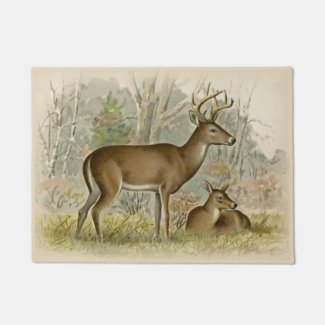
This doormat features a vintage style white tailed deer illustration.


This mask is decorated with a mule deer buck and doe scene


This note card is designed to accompany deer-related gifts.


Featuring a pattern of white tailed deer buck icons, this wrapping paper is for hunters or other outdoor lovers.

The full line of white tailed deer collectibles can be found at North America online store.


Saturday, December 31, 2016

Wisconsin Osprey Nesting


According to the 2016 Wisconsin Bald Eagle and Osprey Survey Report, record number of occupied osprey nests were observed in the state during 2016.

Osprey nests were found in record numbers: 558 occupied osprey nests were observed in Wisconsin, up from 542 in 2014.

At present, 75 percent of Wisconsin osprey nests are built on artificial platforms erected on utility poles, cell phone towers, and other tall structures.

Osprey populations in Wisconsin declined dramatically from the 1950s to early 1970s.

The osprey is one of North America's most recognizable birds of prey. Adults feed almost exclusively on fish. Their shrill call is a familiar sound to birders, anglers, and outdoor explorers.

source: Wisconsin Department of Natural Resources

Friday, December 2, 2016

National Audubon Society Christmas Bird Count 2016-2017

The 2016-2017 annual National Audubon Society Christmas Bird Count is coming soon.

Between December 14th and January 5th, tens of thousands of bird-loving volunteers will participate in counts across the Western Hemisphere.


The Christmas Bird Count is the longest-running wildlife census in the world. Each individual count takes place in a 15-mile-wide circle and is led by a compiler responsible for organizing volunteers and submitting observations to Audubon. Within each circle, participants tally all birds seen or heard that day.

The Audubon Christmas Bird Count is a citizen science project organized by the National Audubon Society.

There is no fee to participate and the quarterly report, American Birds, is available online. Counts are open to birders of all skill levels.

For more information, visit www.christmasbirdcount.org.

source: National Audubon Society

Friday, November 18, 2016

Beaver Creek Public Access (Maryland)

The Maryland Department of Natural Resources (DNR) recently acquired 6.5 acres along Beaver Creek in Washington County.

“This acquisition will provide anglers enhanced and improved access to Beaver Creek, a unique spring-fed creek environment that supports an excellent fishery for wild brown trout,” said Fishing and Boating Services Director David Blazer. “The limestone stream provides an excellent year-round fishery for residents and visitors alike.”

Located downstream from the Albert M. Powell State Fish Hatchery in Hagerstown, the new area will provide public access to Beaver Creek for catch and release fly-fishing.

The Program Open Space acquisition provides increased public access to nearly half of the current one-mile special trout management area, which was previously private land.


Beaver Creek is a tributary to Antietam Creek.

source: Maryland Department of Natural Resources

Monday, October 31, 2016

Nature Pattern Leggings

Nature pattern leggings are popular throughout North America. Legging designs include floral prints, animal patterns, and other artwork. Nature prints are available as all-over designs, random patterns, repeating patterns, and other styles.

Classic animal prints are generally offered in all over styles. Popular animal prints include zebra, tiger, leopard, cheetah, jaguar, giraffe, and other designs that mimic natural animal patterns. Animal prints are popular in black and white, natural, and bright colors.

Patterns consisting of nature themed icons are also popular. Common designs features mammals, birds, fish, herps, and other creatures found in the wild.

Floral, plant foliage, and tree bark patterns are often found on leggings. Countless floral designs can be found on leggings, ranging from lifelike photo patterns to classic illustrations. Camo style prints are also popular.


Related Posts
Red Fox Art
Wildlife Gift Ideas

Thursday, June 30, 2016

Oaxaca Cave Sleeper

Researchers from the U.S. Geological Survey and Louisiana State University have identified a new genus and species of cavefish from Mexico, the Oaxaca cave sleeper (Caecieleotris morrisi).

The species is the first cave-adapted sleeper goby to be found in the Western Hemisphere. The fish, identified from museum specimens, has not been seen alive in more than two decades and lives in a cave system threatened by damming.

The Oaxaca Cave Sleeper occurs in a single cave system beneath Presa Miguel Alemán reservoir, which is formed by a dam on the Tonto River, a tributary of Mexico’s second largest river.

There are only 13 known individuals, all collected at the same time. Thomas L. Morris, a renowned cave diver and cave biologist who works to protect caves and their inhabitants, collected the fish in 1995.

Morris gave the specimens to the Florida Museum of Natural History where Stephen Walsh, now a researcher with the USGS, recognized the distinctiveness of the new species while in the process of conducting taxonomic research and digitizing the museum’s fish collection.

Walsh and colleague Prosanta Chakrabarty of Louisiana State University compared the specimens to other sleepers, and determined that they represent a new genus and species.

The researchers gave the Oaxaca Cave Sleeper the scientific name Caecieleotris morrisi to honor Morris for his discovery and his dedication to conservation.

Discovery of the new species afforded an opportunity for the USGS to partner with the natural history museum community in designating a scientific name for this unique cavefish.

The paper, A new genus and species of blind sleeper (Teleostei: Eleotridae) from Oaxaca, Mexico: first obligate cave gobiiform in the western hemisphere, was recently published in the journal Copeia, a widely-cited journal that publishes original research on fishes, amphibians and reptiles.

source: U.S. Geological Survey

Friday, November 27, 2015

2015-16 Kentucky Waterfowl Forecasts

Kentucky duck numbers are expected to be strong during the 2015-16 winter season, according to Kentucky Department of Fish and Wildlife Resources.

“This year, we’ve had the highest counts of ducks as a whole by the U.S. Fish and Wildlife Service and the Canadian Wildlife Service,” said John Brunjes, migratory bird coordinator for the Kentucky Department of Fish and Wildlife Resources. “It is the highest counts ever with 49,522,000 ducks as well as 11,643,000 mallards, also a new record.”

Green-winged teal populations are at their all-time high with just over 4 million birds and numbers of gadwall numbers are also exceptionally high with 3,834,000 birds.

Cold weather could push northern duck populations into Kentucky. “The migration maps show many ducks in the upper Plains and upper Midwest,” Brunjes explained.

Popular areas for viewing waterfowl in Kentucky include Clarks River National Wildlife Refuge, numerous state parks, and private refuges.

Sunday, October 18, 2015

Wildlife Themed Gift Ideas

Featured in this post are a variety of wildlife and nature themed products which are suitable as holiday gifts.

Calendars are popular for winter holiday gifts:


This collection of calendars includes gift ideas for birdwatchers, beach combers, shell collectors, and other nature enthusiasts

A popular accessory is wildlife themed wrapping paper:


Wildlife and nature themed wrapping paper in this collection are suitable for Christmas, birthdays, and other occasions. Designs feature birds, fish, mammals, floral patterns, foliage, and others.

Wildlife and nature theme doormats are another possibility:


A doormat can be a practical gift while also serving as an accent or decor piece. Nature doormats depict beautiful landscapes, native plants, floral prints, tree bark, animals, birds, fish, and others.

Related Posts

Red Fox Art
Nature Pattern Leggings

Monday, March 16, 2015

Chesapeake Bay Waterfowl

Mallard Drake
Mallard Drake
Many of North America's best known waterfowl can be found on the Chesapeake Bay. Located along the Atlantic Flyway, the estuary is an important stopover and wintering area for waterfowl.

During spring, mallards, black ducks, green-wing teal, and Canada geese nest in saltwater marshes of Chesapeake Bay. Farther up the watershed, wood ducks raise their young.

In summer, some waterfowl become secretive and move into backwater hideaways where abundant vegetation conceals their presence. In contrast, mallards and Canada geese often remain in areas where human activity occurs.

As days shorten and nights become cooler, flocks of migratory Canada geese appear in the skies over the watershed. By late fall, surf scoters and long-tailed ducks appear on the open waters of the Chesapeake Bay.

By mid winter, waterfowl populations increase as residents and early season migrants are joined by Atlantic brant, snow geese, and tundra swans.

Despite cold temperatures, many of the watershed's creeks and rivers become feeding areas for common mergansers, red-breasted mergansers, and hooded mergansers.

In spring as temperatures begin to rise and daylight increases, many species begin to move out of the Chesapeake Bay as the migrate towards their summer breeding grounds.

Some waterfowl remain on the estuary year round. The marshes, swamps, and other secluded habitats of the Chesapeake Bay watershed provide important nesting and nursey areas for black ducks, wood ducks, teal, Canada Geese, and other waterfowl.

Friday, February 27, 2015

Top 10 USA National Parks

In 2014, there were 292.8 million visits to U.S. national parks, breaking the previous record set in 1987 when parks saw just over 287.2 million visits.

The official number of recreational visits to national parks in 2014 was 292,800,082, an increase of 19 million, or seven percent, from 2013 visitation of 273,630,895. Visitation in 2014 rebounded from a 2013 decline that included a 16-day government shutdown and many park closures for repairs after Superstorm Sandy hit the northeast in late 2012.

Several national parks saw record-breaking visitation in 2014, including Joshua Tree, Rocky Mountain, Grand Teton and Glacier national parks. The re-opening of the Washington Monument, some 21 months after it was rocked by an earthquake and repaired, also added to 2014 visitation numbers.

Grand Canyon National Park bumped Delaware Water Gap National Recreation Area out of the top 10 most visited areas in the national park system. The list of top ten national parks remains unchanged, although Rocky Mountain and Olympic National Parks switched places.

Top 10 most visited places in the National Park System:

Golden Gate National Recreation Area     15,004,420
Blue Ridge Parkway     13,941,749
Great Smoky Mountains National Park     10,099,276
George Washington Memorial Parkway     7,472,150
Lincoln Memorial     7,139,072
Lake Mead National Recreation Area     6,942,873
Gateway National Recreation Area     6,021,713
Natchez Trace Parkway     5,846,474
Chesapeake & Ohio Canal National Historical Park     5,066,219
Grand Canyon National Park     4,756,771


Top 10 most visited national parks:

Great Smoky Mountains National Park     10,099,276
Grand Canyon National Park     4,756,771
Yosemite National Park     3,882,642
Yellowstone National Park     3,513,484
Rocky Mountain National Park     3,434,751
Olympic National Park     3,243,872
Zion National Park     3,189,696
Grand Teton National Park     2,791,392
Acadia National Park     2,563,129
Glacier National Park     2,338,528


10 national parks with the lowest number of visitors (2014):

Salt River Bay National Historical Park & Ecological Preserve, Virgin Islands
Alibates Flint Quarries National Monument, Texas
Nicodemus National Historic Site, Kansas
Eugene O'Neill National Historic Site, California
Bering Land Bridge National Preserve, Alaska
Yukon-Charley Rivers National Preserve, Alaska
Thaddeus Kosciuszko National Memorial, Pennsylvania
Port Chicago Naval Magazine National Monument, California
Rio Grande Wild and Scenic River, Texas
Aniakchak National Monument and Preserve, Alaska

For more information, visit: www.nps.gov.

source: National Park Service

Friday, March 7, 2014

North American Snow Goose Populations

Snow Geese
Snow Geese

Populations of snow geese, blue geese, and Ross’s geese in North America, collectively referred to as “light geese,” have grown to record levels over the past three decades, according to the U. S. Fish and Wildlife Service (USFWS).

USFWS biologists theorize that the overabundance of light geese is harming arctic tundra breeding habitat, which could have negative impacts on light geese and other bird species that depend on these areas.

Since 2009 hunters have had the opportunity to pursue snow geese during the spring as a result of a special management action referred to as a “Conservation Order” allowed by the U.S. Fish and Wildlife Service

The measure was adopted at the recommendation of federal and state wildlife scientists in response to concerns about a growing number of snow geese across North America.

Eight states in the Atlantic Flyway (Delaware, Maryland, New Jersey, New York, North Carolina, Pennsylvania, Virginia, and Vermont) will hold a Spring Snow Goose Conservation Order in 2014.

source: U. S. Fish and Wildlife Service

Friday, February 14, 2014

Best Areas to View Snow Geese in New Jersey

Snow Geese
Snow Geese

The following is a summary of the best areas in New Jersey to view snow geese:

Northern Jersey

In Northern Jersey, snow geese often winter at Merrill Creek Reservoir. These flocks typically exceed 15,000 birds in January and can build to over 75,000 birds in late winter. Merrill Creek Reservoir flocks may cover a wide area during daily feeding forays. Feeding snow geese are usually found from Belvidere to Washington to Clinton to Flemington.

Central New Jersey

Snow goose flocks typically total 5-10 thousand birds in central New Jersey. Flocks in this region are seen feeding in fields in an area from Cranbury to Roosevelt to Wrightstown to Burlington.

Delaware Bay

Delaware Bay tidal marshes and nearby inland farm fields attract the highest numbers of snow geese in New Jersey. During the Mid-Winter Waterfowl Survey in early January, researchers may estimate 100,000 light geese in these areas.

Delaware Bay flocks feed, roost and loaf in the tidal marshes yet often make inland field feeding flights primarily into Salem and Cumberland Counties. At times, flocks range as far inland as Mullica Hill, Turnersville and Franklinville.

Southern New Jersey
Snow geese can be found in and around Forsythe National Wildlife Refuge in Oceanville. Mid-Winter Waterfowl Survey counts from early January are typically about 5,000 birds in this region.

source: NJDEP Division of Fish and Wildlife

Wednesday, February 5, 2014

Connecticut Urban Waterfowl

Researchers found high numbers of mallards and other puddle ducks in urban sanctuaries during Connecticut’s annual Midwinter Waterfowl Survey. The presence of wild waterfowl in urban areas is often associated with supplemental feeding activities, according to the Connecticut Department of Energy and Environmental Protection (DEEP).

“The Department discourages citizens from feeding waterfowl for a number of reasons, including increased risk of disease transmission, potential for poor nutrition, and a clouding of the real issue facing waterfowl and wildlife in general in Connecticut – loss of suitable habitat,” said Rick Jacobson, Director for the DEEP Wildlife Division.

DEEP conducted the annual Midwinter Waterfowl Survey on January 8 and 9, 2014. The survey is conducted throughout the Atlantic Flyway, and is used as an index of long-term wintering waterfowl trends.

The Connecticut survey is conducted from a helicopter and a census is obtained from the coast, the three major river systems, and selected inland lakes and reservoirs.

A brochure entitled, “Do Not Feed Waterfowl” outlines potential hazards of feeding waterfowl. The document is available on the DEEP website at: http://www.ct.gov/deep/lib/deep/wildlife/pdf_files/game/NoFeedWF.pdf.

source: Connecticut Department of Energy and Environmental Protection

Saturday, February 1, 2014

Middle Columbia River Steelhead Restoration

Middle Columbia River steelhead is listed as a species threatened with extinction under the federal Endangered Species Act (ESA).

In 2013, NOAA Fisheries designated a population of Middle Columbia River steelhead as “experimental.” The designation will support the reintroduction of steelhead to historical spawning and rearing habitat in the upper Deschutes, helping to re-establish the population.

As part of ongoing efforts to restore steelhead trout in the watershed, Stearns Dam on the Crooked River has been removed. The dam removal will allow steelheads to access 12 additional miles of quality habitat that was previously inaccessible.

The dam’s removal is the result of collaboration among the Crooked River Watershed Council, NOAA’s Restoration Center, American Rivers, the Oregon Watershed Enhancement Board, U.S. Bureau of Land Management, and the local landowner.

source: NOAA Fisheries

Friday, January 3, 2014

Michigan Lake Sturgeon Restoration

More than 5,000 lake sturgeon were stocked by the Michigan Department of Natural Resources (DNR) during the agency's fall
2013 fish stocking season.

In cooperation with the U.S. Fish and Wildlife Service, the Southern Lake Michigan Management Unit stocked 50 fingerling lake sturgeon into the Kalamazoo River.

The Marquette Fisheries Research Station stocked a total of 598 fingerling lake sturgeon into four sites in the Upper Peninsula.

The DNR's cooperative hatchery with Michigan State University stocked 4,490 fingerling lake sturgeon into Black, Burt and Mullet lakes.

For more information, visit www.michigandnr.com.

source: Michigan Department of Natural Resources